Tuscany is truly an extraordinary land, rich in history and tradition, famous for its slow rhythms, breathtaking landscapes, art cities, and charming villages. There’s so much to see here – so much that even we Tuscans don’t fully know our own region.
That’s why today I want to share with you some unusual itineraries, almost hidden places, far from the typical tourist trails.
I hope this little guide will give you fresh inspiration. For me, it was also a chance to rediscover my homeland more deeply: it surprised me even more and made me realize just how magical it is to live here.
Are you ready to discover it with me? Then let’s start the journey…
Montefioralle
A tiny Tuscan village, considered one of the most beautiful in Italy and the birthplace of Boccaccio. What makes this small hamlet so special is the care and love of its few inhabitants, which make it even more charming and picturesque.
The view is stunning not only when you arrive but also throughout the road that leads you there.
Just a few kilometers away lies the more famous Greve in Chianti, well-known yet incredibly beautiful. Don’t miss its winding narrow streets, the lovely main square, the wineries, and the surrounding views.
Volpaia
A tiny medieval village in the heart of Chianti, between Radda and Gaiole in Chianti, in the province of Siena. It’s famous for its timeless atmosphere and the countryside all around. Surrounded by vineyards, olive groves, and woods, it’s a truly magical place.
The still-intact medieval walls make it romantic and evocative. The historic center is a maze of narrow alleys winding between stone houses and artisan workshops. In the main square stands the Church of San Biagio, dating back to the 12th century.
What to do: go hiking or cycling in the area and visit the Chianti Classico wineries.
Castellina, Radda e Gaiole in Chianti
Three nearby villages, all equally beautiful:
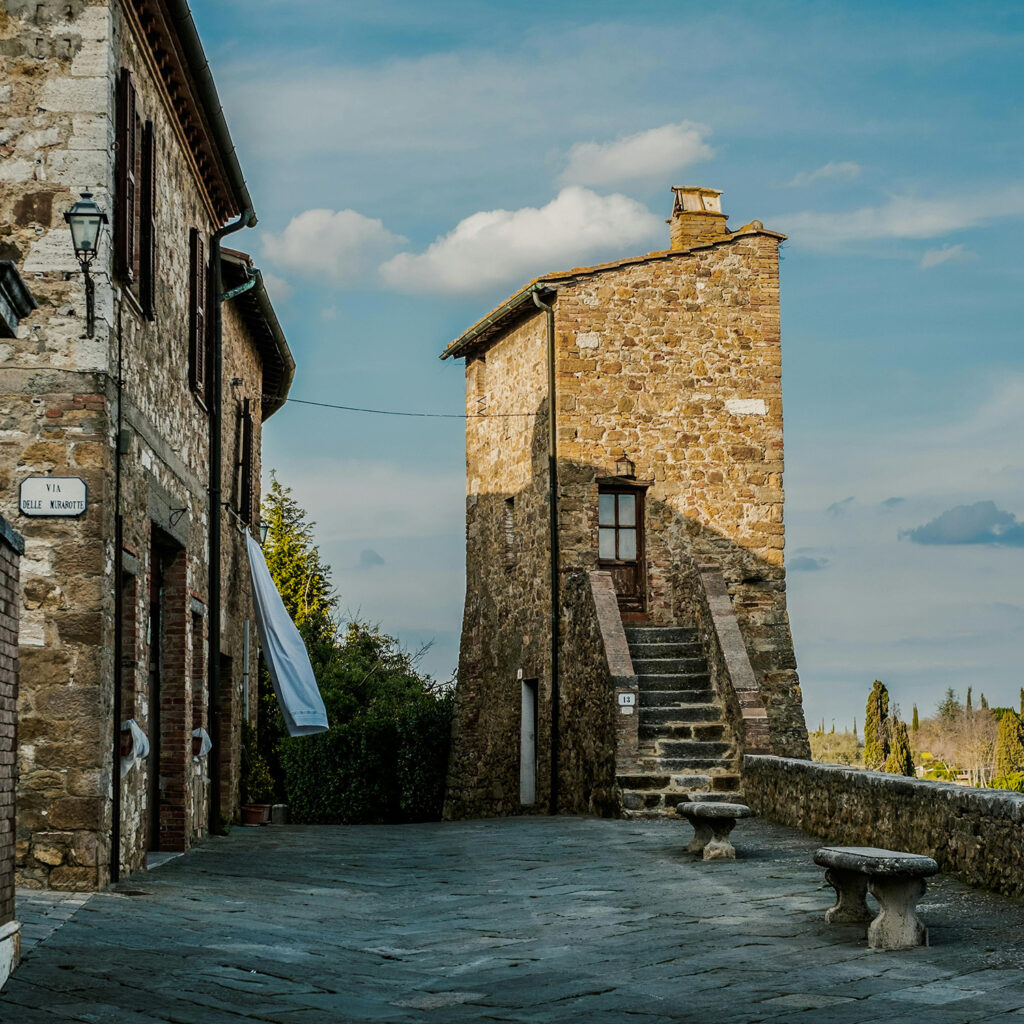
- Castellina: Etruscan remains, the enchanting Via delle Volte, and the fortress.
- Radda: a medieval center with Palazzo del Podestà and the Church of San Niccolò.
- Gaiole: Brolio Castle, the Pieve of Santa Maria a Spaltenna, and its charming streets.
Badia a Passignano
A small hamlet in the municipality of Barberino Tavarnelle, surrounded by nature.
Among its highlights is the Church of San Michele Arcangelo, a Latin-cross church with a single nave dating back to the 12th century. From here, you can enjoy unforgettable sunsets in a truly unique setting.
Barberino Val d’Elsa
A small medieval village filled with historic palaces, quaint churches, and breathtaking views.
Must-sees: Palazzo del Cardinale, Palazzo Petroio, the Church of San Bartolomeo, the Pieve of Sant’Appiano (one of the oldest in Chianti), and Tignano Castle.
Monteriggioni
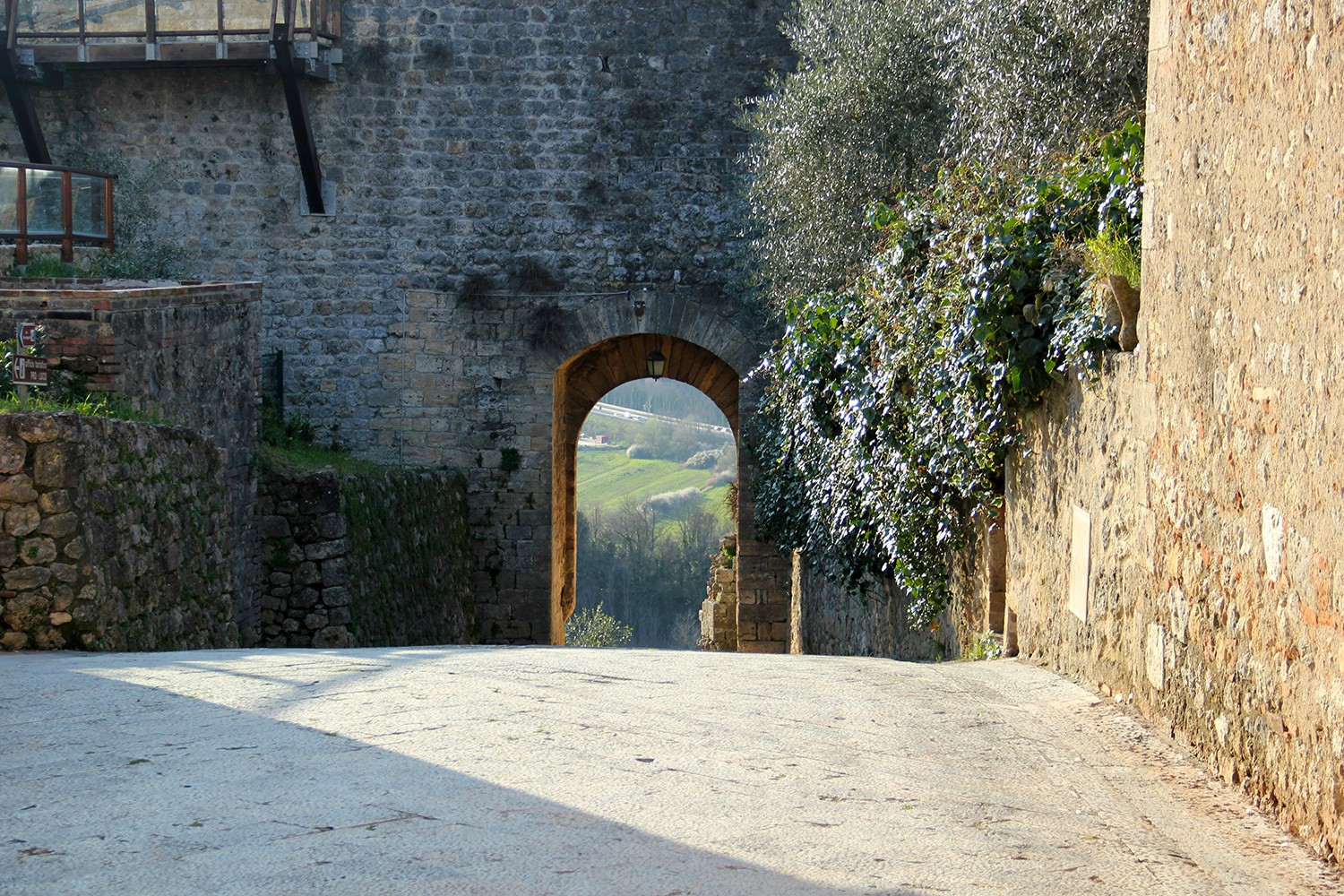
Near Siena, a charming medieval village surrounded by perfectly preserved walls. Absolutely stunning.
Volterra
Perhaps one of the best-known villages, but I couldn’t leave it out: I love it deeply—it’s a truly magical place.
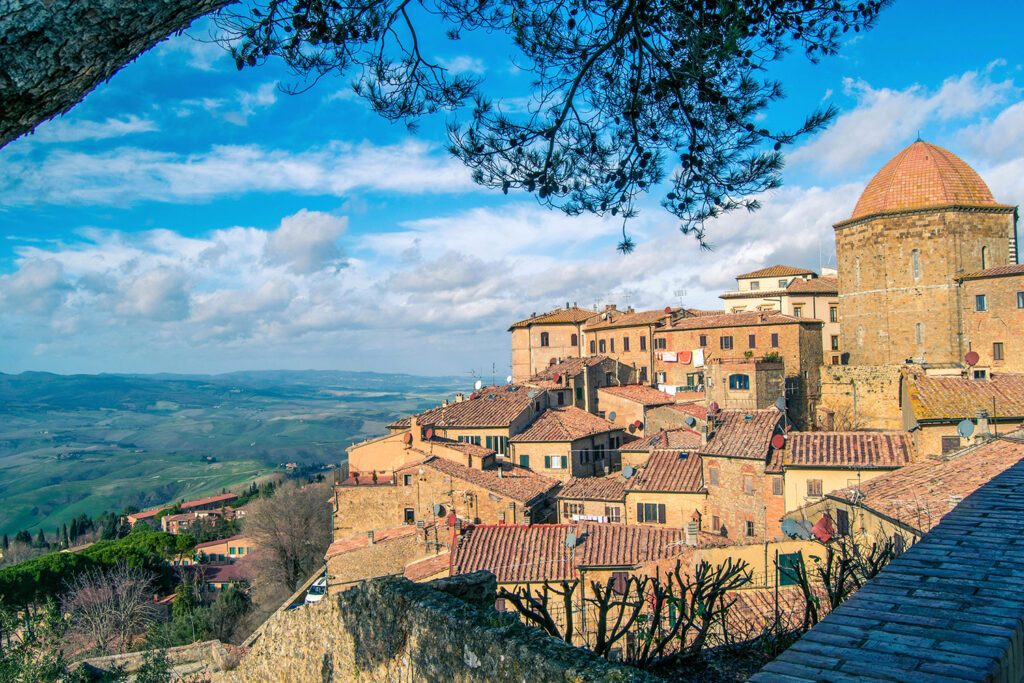
Volterra boasts one of the most beautiful squares in Italy, Piazza dei Priori: from here you can admire Palazzo dei Priori, the Cathedral, and the Baptistery. Wandering further, you’ll come across a series of Renaissance palaces, like Palazzo Minucci, and the Alabaster Museum.
Volterra should be admired in its entirety: don’t forget to look up at the typical Tower Houses—fortified homes built by wealthy families to protect themselves and their treasures.
Don’t miss the Buonparenti, on the opposite side of Piazza dei Priori, and Casa Toscano. Also unmissable: the Roman Theatre, the Porta all’Arco, and the Ponti walk, which starts from Piazza Martiri della Libertà. On clear days, you might even catch a glimpse of the sea.
Another extraordinary experience, just outside the center, is a visit to the Volterra Salt Pans: at the Locatelli Factory you’ll find a spectacular salt waterfall, a museum, and an art space showing how even salt can be transformed into a true work of art.
Nearby, I also recommend the Balze of Volterra—dramatic rock formations shaped by erosion. Perched on one of these cliffs still stands the Badia Camaldolese (1034), also known as the Abbey of Saints Giusto and Clemente. The abbey is worth visiting for its well-preserved cloister and refectory, but also simply for the breathtaking view.
Hermitage of Montesiepi & Abbey of San Galgano
Not far from Siena, two absolutely must-see sites:
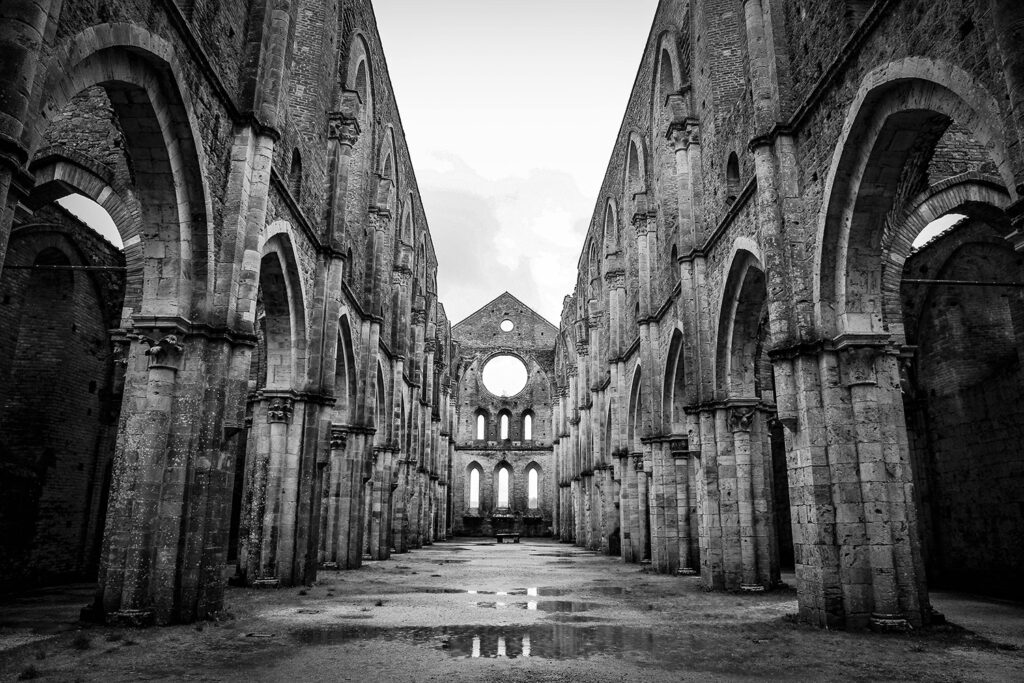
- Abbey of San Galgano: founded in the 12th century, it was once an important spiritual and cultural hub. Today it is famous as the “roofless church”: an impressive unfinished Gothic structure nestled among woods and hills, blending nature and spirituality. A truly unique site, well worth a visit.
- Hermitage of Montesiepi: home to the legendary Sword in the Stone, tied to the story of Saint Galgano. A mystical place surrounded by nature, perfect for a walk between history and legend.
Peccioli
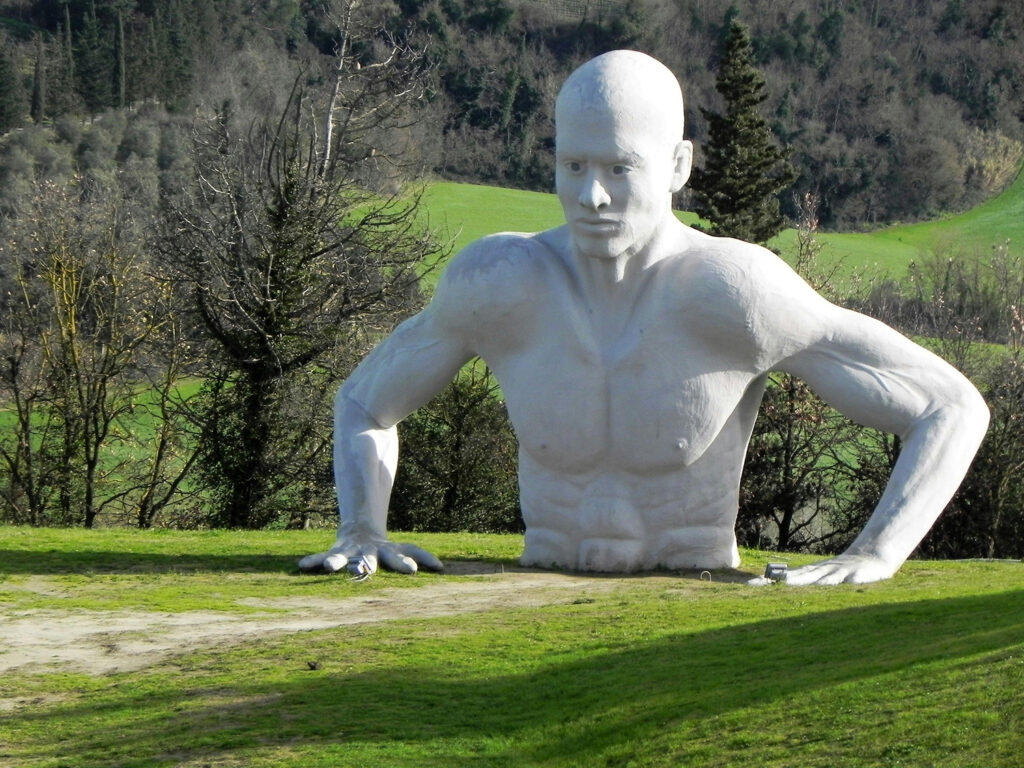
Once known mainly for the Pinocchio Park, today Peccioli has reinvented itself, becoming a magical village: an open-air contemporary art museum that has not lost its Tuscan roots.
Don’t miss:
- Naturaliter – Presenze (2011): monumental fiber-cement installations along Via della Fila, the Fonte Mazzola Amphitheatre, and at the Legoli waste treatment plant. Four gigantic human sculptures here symbolize rebirth, even in a place once linked only to disposal.
- Fonte Mazzola Amphitheatre: where the sculptures enrich the stage setting of events, making it even more atmospheric.
- Panoramic Terrace: a modern structure blending perfectly into the Tuscan landscape.
- Lo Sguardo di Peccioli, Endless Sunset, and the Bridge of Infinity: artworks combining tradition and modernity, evoking pure emotion.
Peccioli is a village full of surprises, where art, innovation, and Tuscan tradition coexist in harmony.
Colle Val d’Elsa
Colle Val d’Elsa is a lovely town of about 20,000 inhabitants located in the heart of Tuscany, in a strategic position near Siena, Florence, and Volterra, along the ancient Via Francigena.
Despite all this, it’s still off the beaten tourist path.
It’s hard to understand why this little gem isn’t more famous — it’s truly a fascinating place, with a beautiful old town perched on a hill. Colle Val d’Elsa is full of museums, monuments, and, as you can imagine, breathtaking countryside views. Definitely worth a visit!
The town is divided into two parts, “Colle Alta” (Upper Colle) and “Colle Bassa” (Lower Colle), connected by a 24-hour lift-funicular.
Colle Val d’Elsa also has a centuries-old tradition of crystal production, which made it one of Italy’s most important centers for this extraordinary craft. Alongside the many shops, there’s also the Crystal Museum, absolutely worth a stop.
It’s also the birthplace of Arnolfo di Cambio, a famous Tuscan sculptor and architect. The main square in the lower town is dedicated to him, while his medieval tower-house, where he was born, still stands in the old town.
San Miniato
A small village between Pisa and Florence, best known for its white truffle and leather production.
Every year, several events and festivals celebrate this Italian delicacy, especially in autumn, between October and November. If you’re a fan of fine food, San Miniato is the place to be!
But there’s more than truffles here — San Miniato is full of charm. Here are a few of my personal suggestions:
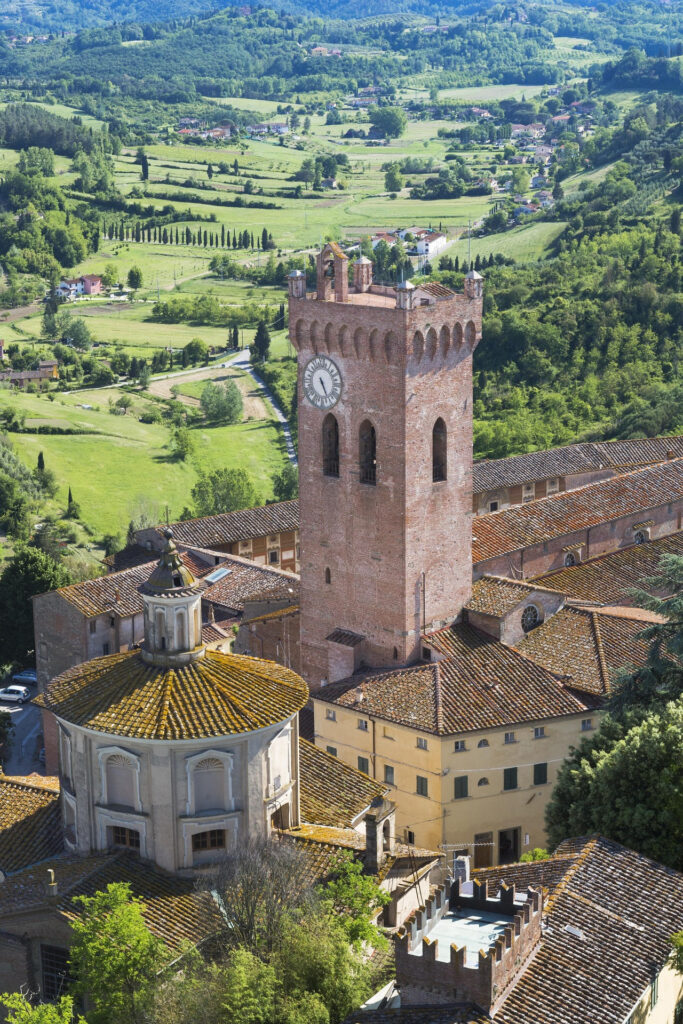
- Cathedral of Santa Maria Assunta and San Genesio: located in the heart of the old town, this impressive 12th-century building is one of San Miniato’s main landmarks. Its façade, in Pisan Romanesque style, is covered with red bricks and decorated with 26 beautiful ceramic basins.
- Palazzo del Seminario Vescovile: built following the line of the old medieval walls, it has been expanded since 1622, the year the Diocese of San Miniato was established.
- Church of the Santissima Annunziata: famous for its dome, hidden on the outside by a tall octagonal drum, and decorated inside with an impressive fresco by Anton Domenico Bamberini depicting the Coronation of the Virgin.
- Rocca di Federico II: this fortified tower dominates the hilltop and dates back to between 1217 and 1223, built by order of Emperor Frederick II. After centuries of history — and even destruction during World War II — it was faithfully rebuilt in 1958. From the top, you can enjoy an incredible panoramic view, stretching from the Apennines to the sea.
These are just a few highlights, but San Miniato is absolutely worth a visit!
Pisa (but an Unexpected Pisa)
Yes, I know — Pisa is world-famous… but today I don’t want to talk about the Tower or Piazza dei Miracoli!
I want to show you a different side of Pisa, full of hidden gems and surprising stories.
Because Pisa isn’t just the Leaning Tower — it’s so much more! Curious yet?
Let’s start with an extraordinary story. Art lovers will surely know Keith Haring, the iconic artist known for his colorful murals all around the world. But did you know that one of his most famous works is right here in Pisa?
It’s called “Tuttomondo”, and it’s painted on the wall of the convent of Sant’Antonio Abate.
It all began when Haring met a young student from Pisa, Piergiorgio Castellani, in New York. Piergiorgio invited him to visit his hometown, and during his stay, Haring decided to create a mural on a large wall facing the bus station — so everyone heading downtown would see it.
He painted it in June 1989, and it’s absolutely unmissable if you visit Pisa!
Another must-do is a walk along the Lungarni, where you can admire historic buildings like Palazzo dei Medici, Palazzo Toscanelli, and the Church of San Matteo in Soarta.
Also worth checking out is the unique tour “Pisa from Above and Below: The Walls and the Arno”, organized only during certain times of the year (usually in spring and autumn, by reservation). To stay updated, check the websites City Grand Tour, Terre di Pisa, or Mura di Pisa.
Don’t miss the Church of Santa Maria della Spina, a stunning little Gothic jewel that I personally adore.
Also beautiful is Piazza dei Cavalieri, with the nearby Palazzo dell’Orologio, a medieval building that incorporates the infamous “Tower of Hunger,” where in 1289 Count Ugolino Della Gherardesca died with his sons and grandsons — a tragic story told by Dante in the Divine Comedy.
One last must-see: Borgo Stretto and Borgo Largo, the most characteristic streets in the city center, full of arcades, boutiques, and cozy cafés.
Calci and Surroundings
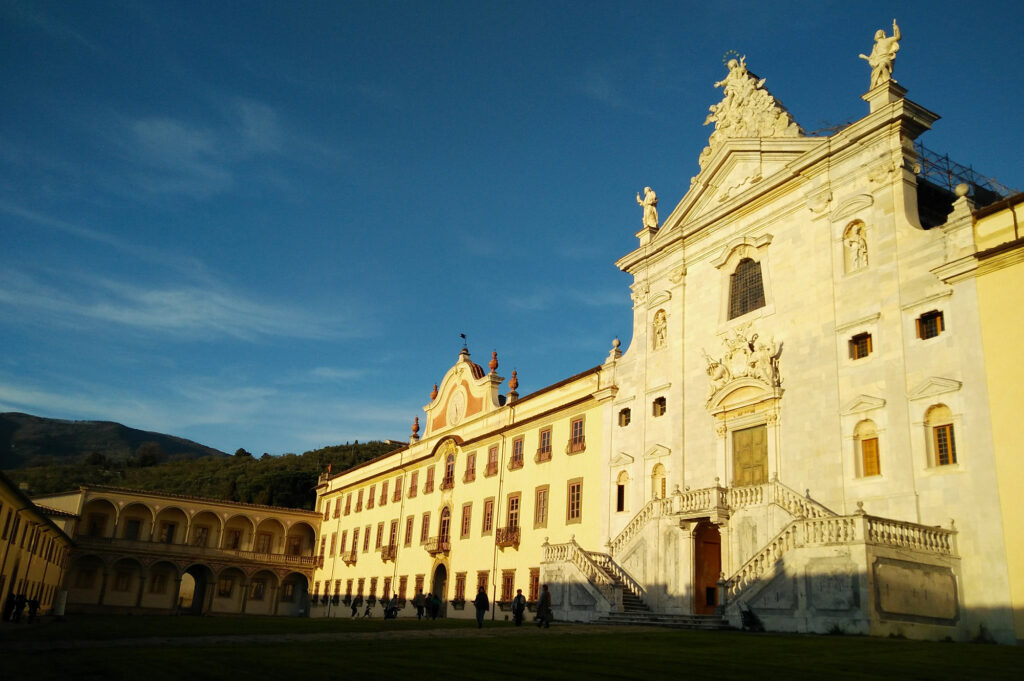
Just 10 km outside Pisa, you’ll find the small village of Calci, famous for the Certosa di Calci, a stunning historic building that’s now home to two museums.
- The National Museum of the Certosa Monumentale di Calci, with its lavish decorations, grand courtyard, and richly frescoed church.
- The Natural History Museum of the University of Pisa, one of my favorites (and my daughter’s too!). It’s a fascinating place that both kids and adults will love — especially anyone who’s into paleontology.
If you love nature, don’t miss the San Rossore Natural Park (you can find more information on their website).
Still in the Pisa area, there’s Pontedera, home to the Piaggio Museum — an unmissable stop for fans of the legendary Vespa and of Italian motor history in general.
More than a destination, an emotion
I hope my guide has sparked your curiosity and given you some inspiring ideas.
A personal tip: traveling through Tuscany isn’t about ticking places off a list or filling your phone with photos you might never look at again.
A real journey through Tuscany is about starting the car, putting on a good song, rolling down the windows, and breathing in the countryside.
It’s about feeling that sense of freedom and wonder on your skin, enjoying the road with no distractions.
The destination matters, of course, but it’s the details along the way — the vineyards, woods, olive groves, sunrises, and sunsets — that make the journey truly unforgettable.